
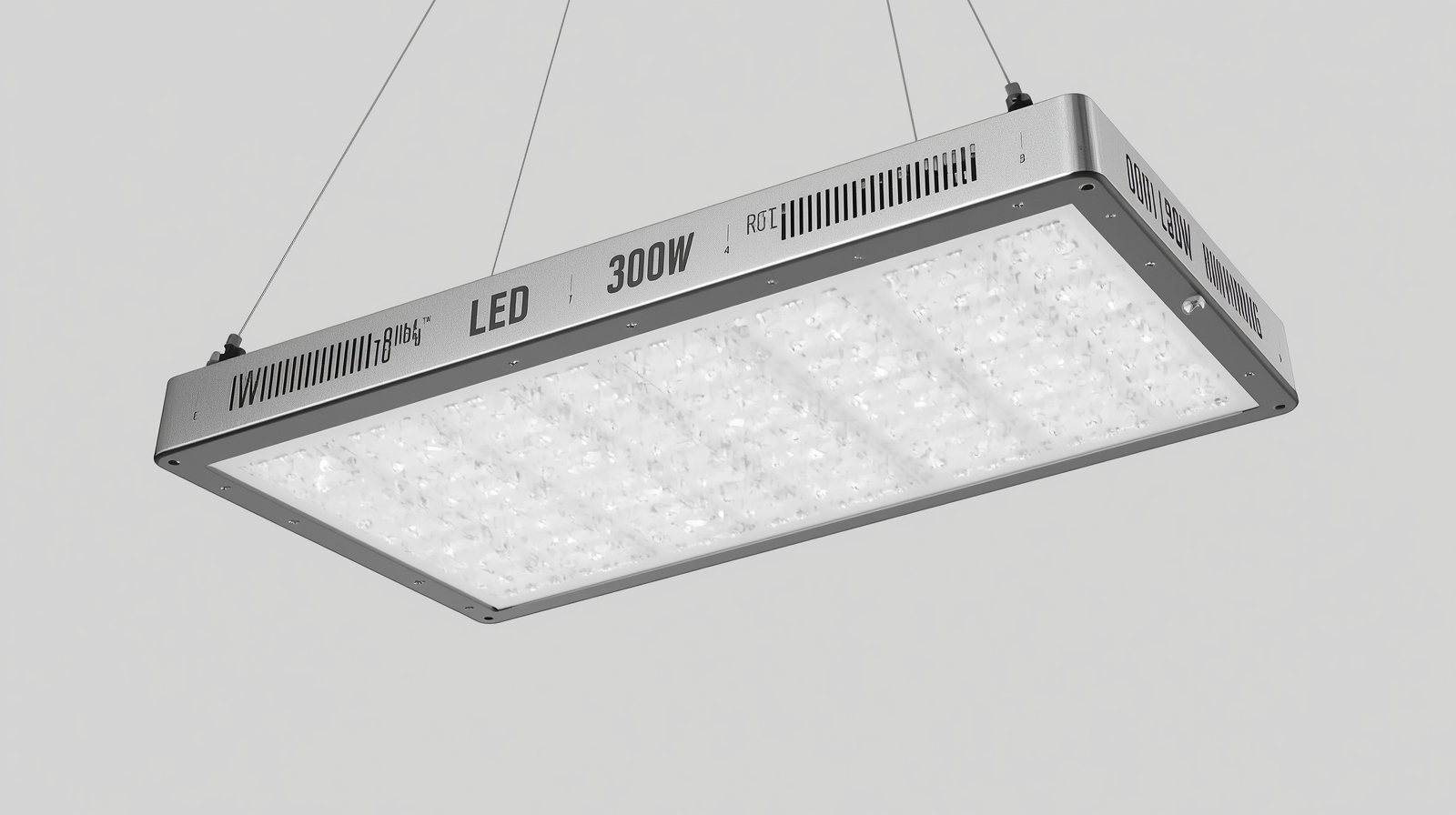
You may have confused HID grow lights with LED grow lights. LED grow lights use LED technology to cultivate plants and other nursery crops indoors. LEDs offer many advantages that traditional grow lights such as fluorescent, metal halide, or high-pressure sodium lights cannot provide.
What are LED grow lights?
There are also some cheap LED grow lights for indoor plants in this price range, but they have never been good enough. However, thanks to Chinese manufacturers who have improved their products, the market now offers some of the most affordable LED grow lights online that actually work well. All of these LEDs are reasonably priced.
Certainly, LED grow lights are the best artificial light source available to stimulate plant growth. They emit an electromagnetic spectrum suitable for photosynthesis.
How many watts do I need per plant?
When comparing the wattage of different grow lights, consider the “actual power draw” or “actual power consumption” in watts. In general, grow lights should use at least 32 watts per square foot of grow space, though 50 to 80 watts per square foot is ideal.
The actual brightness of LED lights is measured in lumens, not watts, so this is another way to measure light intensity. Vegetables typically need 2,200 lumens per square foot, while other plants often need around 1,375 lumens per square foot.
LED Wattage and Coverage Area Calculations
Wattage is often used to reference LED size, price, and coverage area. Although wattage is a useful indicator, it is not the most accurate way to determine the coverage area of an LED grow light. The most accurate measurement is PPFD (photosynthetic photon flux density, or µmol/j/m²). PPFD can be simply understood as the number of light particles (photons) falling on a given surface each second.
PPFD (µmol/j/m²) and DLI are the most accurate units for measuring useful light intensity over a specific area. Combined with the appropriate spectrum for your plant type and growth stage, PPFD (and spectrum) is the key to a successful grow. However, for estimation purposes, we will present wattage calculations in this article.
When we mention wattage in this article, we are referring to actual wall-draw power consumption, not the “LED wattage” stated by manufacturers — often calculated by multiplying the maximum LED diode wattage by the number of diodes. For example, 300 diodes rated at 3 watts would be advertised as a 900-watt LED grow light. However, the actual wall consumption may be only 500 watts.
What size LED grow light do I need?
As a general rule for optimal yields, choose an LED grow light that provides at least 50 watts per square foot of grow space. Make sure the light can draw 50 watts from the wall (not the total rated LED wattage). For example, a grow area measuring 60 cm × 90 cm will require a 300-watt LED grow light.
CASTNOO 300W 54 LED Grow Lights, Full Spectrum Little Solid Grow Lamp with IR & UV LED Plant Lights

Pros
- High Efficiency Quantum Board
- 1-Year Warranty
- Great Price
- Established Brand
Cons
- Some Defective Units
See details and prices on Amazon here
MaiceMinds 320W Led Grow Lights for Indoor Plants Full Spectrum

Pros
- Top quality construction
- 3-Year Warranty
- Top rated
Cons
- No discreet shipping
See details and prices on Amazon here
Below are important things to keep in mind when growing new plants under artificial lighting:
Light Intensity
Seedlings need a lot of strong light, and when they do not receive enough of it, they become weak and spindly. In most cases, even the strongest sunlight is not sufficient to provide the required light intensity indoors.
The best solution is to grow new plants under LED lights or specially designed fluorescent lights.
Lighting Duration
Most vegetables are “long-day” plants, meaning they need 14 to 18 hours of sunlight (or artificial light) each day. A rest period is essential for healthy growth, so make sure your seedlings also receive at least six hours in darkness. Using an automatic timer is the best way to ensure your lights turn on at the same time every day.
Light Color
Natural sunlight is the best light source for starting seedlings, but with full-spectrum bulbs you can approximate it fairly well. Both full-spectrum LED and fluorescent lights provide a balance of cool and warm light, simulating the natural solar spectrum.
Footprint
Unlike the sun, which covers most of the Earth during the day, grow lights have a much smaller footprint. A footprint is the area illuminated by the light emitted from your grow light.
The farther the light is from your plants, the larger the footprint becomes but the intensity decreases. The interaction between footprint and intensity is an important balancing point when using grow lights.
Whatever type of light you choose, consider your specific growing needs to select the most suitable one.
How many plants can a 300W LED grow light support?
A 300W LED grow light is a powerful tool for indoor gardening. When it comes to how many plants it can grow, the answer is not entirely straightforward. However, in general, a 300W LED grow light can support up to 4–6 plants.
The number of plants a 300W LED can grow depends on several factors, including:
1. Type and size of the plants
The type and size of the plants are important factors when determining how many plants a 300W LED can support. Smaller plants—such as herbs and small vegetables—require less space and can be placed closer together. Larger plants—such as tomatoes and peppers—need more space and therefore fewer plants can be grown under the same light.
2. Grow space
The size of your growing area is another crucial factor in determining how many plants a 300W LED can grow. A smaller grow space means the plants must be placed closer together, and vice versa. A larger space may allow you to grow more plants, which may also require additional lighting.
3. Light intensity
Light intensity plays a major role in how many plants a 300W LED can support. Higher-intensity lights can provide more energy, allowing plants to grow more vigorously. While a lower-intensity light can still help plants grow, you may need to reduce the number of plants to ensure each one receives enough light.
Conclusion
When growing vegetables indoors using a grow tent or starting seeds, natural light is not always sufficient, especially in colder climates or during the winter. While some indoor plants can survive in low-light conditions, others require more light than what a window can provide. Grow lights are highly effective at mimicking sunlight to give plants what they need to thrive.
Under ideal conditions, a 300W LED grow light can support 4–6 plants. Growers should consider plant size, grow space, and light intensity when determining how many plants can be grown under a 300W LED. With proper care, this light can help you cultivate a lush indoor garden with healthy, thriving plants.
Read more about some of the LED grow lights available here: Why Choose Full Spectrum LED Grow Lights? LED Grow Light Reviews 2026
[…] burn out! What is the ideal distance between a grow light and the plant? For example, with the Mars 300W LED grow light, you need to place the light at least 76 cm (or more) above the plant. So before choosing a grow […]
[…] LED lights work best when placed 12 to 18 inches away from your plants. If you use compact fluorescent lamps (CFL), it means you need to find the right height that won’t generate too much heat for your plants. […]