
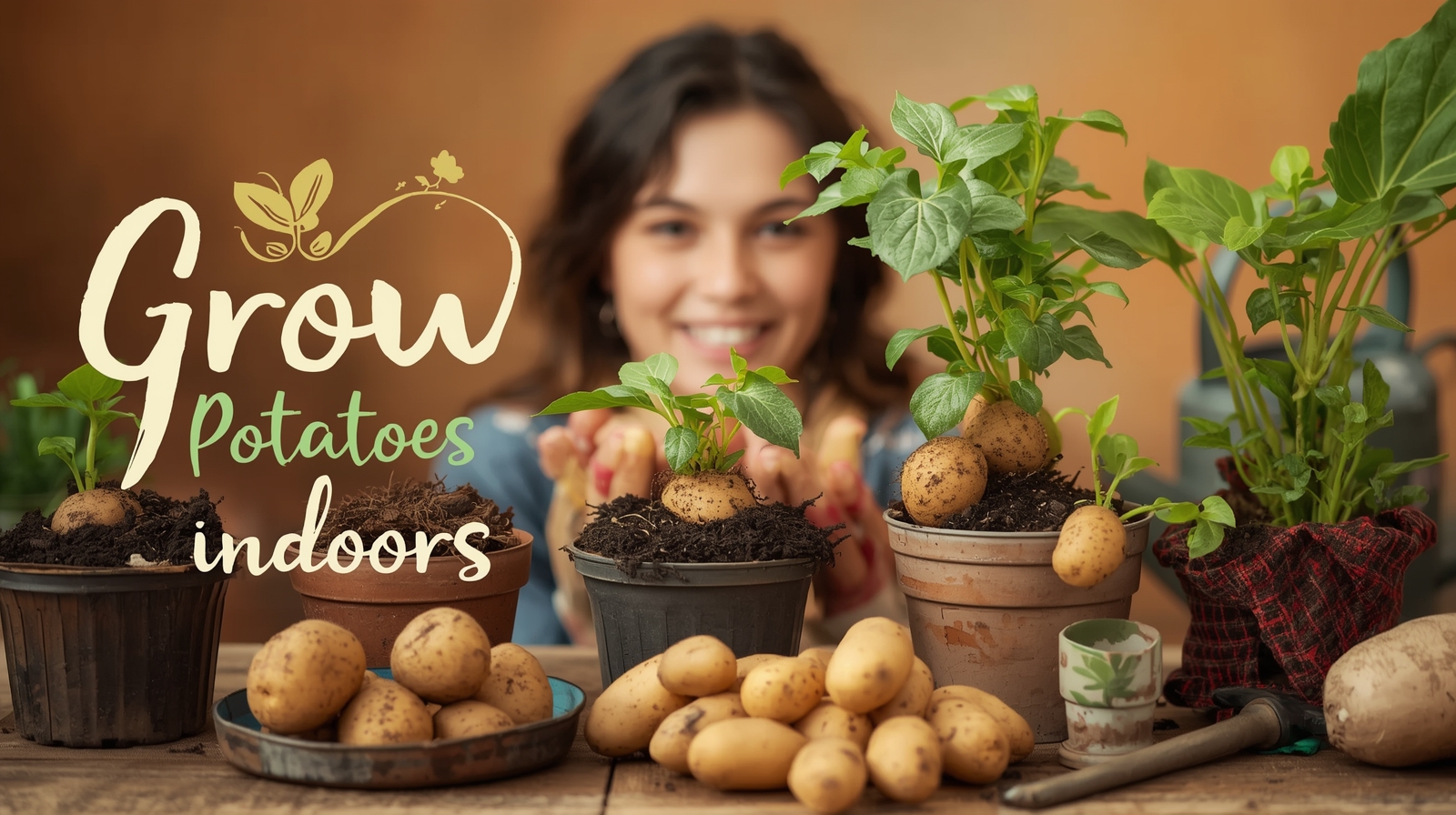
Growing Potatoes Indoors
Growing potatoes indoors is a great idea for many reasons. First, indoor gardeners can choose the soil used to grow this vegetable, which results in higher-quality potatoes.
Potatoes grow best in sandy soil with minimal nutrient content. They are one of the easiest vegetables to grow outdoors, and growing them indoors is an ideal opportunity to produce “specialty” potatoes that are very popular today. Indoor-grown potatoes require a careful balance between water and soil.
Potatoes can be grown from mature potato sprouts. These sprouts look like small white spots on the outer skin of the potato. When potatoes are stored in a warm place, these sprouts usually begin to form naturally. This is an ideal opportunity to use them for an indoor potato garden.
It is important to know that from a handful of potato sprouts, you can harvest between 2.3 and 4.5 kilograms of potatoes. Potatoes need plenty of sunlight to grow well.
Growing Potatoes Indoors from Sprouts
When potato eyes are not available, another way to sprout potatoes is to cut a potato in half. Insert four toothpicks into the potato skin, about 0.6 cm deep around the middle. The toothpicks will help keep the potato close to the water source. Place the potato half on top of a glass filled with water (about 113 ml). Set the glass on a sunny windowsill. Change the water if it becomes cloudy. It takes about one week for the potato halves to begin sprouting.
The Best Way to Grow Potatoes Indoors
To plant potato sprouts directly in soil, choose a wide pot about 15 cm deep. Fill the bottom of the pot with small pebbles and potting soil mixed with light sand. The ratio of potting soil to sand should be 10 parts soil to 1 part sand.
Plant the sprout with the roots facing downward, about 15 cm deep. Be sure to plant the sprouts away from the edge of the pot so they have enough space to grow. Water regularly.
Potato Growth
Within a few weeks, the potato plant will develop dark green foliage. Note that vines may begin to appear beneath the plant. Add more soil to cover these vines.
Tips for Growing Potatoes in Pots
When the potato plant produces light purple tubers, this is a sign that potatoes have formed underground and can be harvested. There are two ways to remove them: the first is to carefully dig them up; the second is to lift the green foliage out of the pot and remove the potatoes from the roots.
However, harvesting potatoes this way will not result in high yields. As long as there is still green foliage in the pot, the potato plant will eventually reproduce from the remaining vines. Continue watering if you want a plentiful harvest.
Experimenting to Create Unique Potato Varieties
There are many different potato varieties available on the market today. Although there are more than 4,000 potato varieties, the most commonly grown types include red potatoes, russet potatoes, white potatoes, Yukon Gold potatoes, blue potatoes, and regular yellow potatoes. Each variety has its own characteristics—for example, russet potatoes are best for baking, red potatoes for boiling, Yukon Gold potatoes for salads and frying, blue potatoes for boiling and baking, and white and yellow potatoes for mashing.
Growing “New” Potatoes Indoors
The term “new potatoes” refers to small, immature potatoes. They can be identified by their thinner, slightly waxy skin and a slightly higher water content compared to mature potatoes. Some people believe new potatoes are sweeter because they have not yet converted sugars into starch. Another difference is their shape most are perfectly round and hold their shape well when boiled or roasted. New potatoes can be grown indoors; however, indoor gardeners need to watch for the first signs of tuber formation and remove the smaller potatoes from the growing pot.
What You Need to Grow Potatoes Indoors
You can grow potatoes indoors in multiple containers. Look for wide, round or square pots with deep bottoms and a depth of at least 30 cm (12 inches). The more space the roots have to grow, the higher the potato yield will be. If you want your indoor potato garden to resemble an outdoor one, place several pots side by side in a sunny location. You should also buy a garden trowel to dig up the potatoes at harvest time. In addition, you will need extra soil when the roots beneath the foliage begin to become exposed. Some local garden supply stores sell prepackaged soil specifically designed for indoor potato gardens.
Ideally, two or three decorative plant pots with a depth of at least 30 cm are enough for a bountiful potato harvest. Plant pots are sold at garden ducdeal shops. The material of the pots and containers is also important. Because potatoes tend to retain moisture, choose pots made of clay or plastic. If you plan to grow several potato varieties, you should buy plant markers. Write the name of each potato variety on a label and attach it to the container.
There are many interesting ways to experiment with growing potatoes. One very effective way to encourage sprouting is to place the white sprouts from mature potatoes into a large, sealable plastic bag. Cover the sprouts with about 2.5 cm of potting soil. Seal the bag for about one day, or until you see the first signs of sprouting. Place the bag on a sunny windowsill. Then open the bag and gradually add more soil as the sprouts grow until the plastic bag is full. This is a fun way to observe potatoes growing indoors. The first crop can be harvested as “new” potatoes, or you can allow them to grow larger. These potatoes will be as sweet as freshly picked sweet corn.
Using the bag method is also an opportunity to hybridize potato varieties. To do this, choose white sprouts from two or more different potato varieties and place them next to each other in the plastic bag. Eventually, the heat from the sun and the moisture-retaining environment of the bag will help the two types of sprouts combine. This can result in potatoes with uniquely colored flesh, depending on the sprouts selected. The result will be your own distinctive hybrid potato variety. Keeping records of the hybridization process can be helpful for future reference.
Potatoes Are Everyone’s Favorite Food
Freshness and quality are excellent reasons to grow potatoes indoors. Convenience is another. Indoor-grown potatoes produce abundant yields, providing a year-round supply of this vegetable. To store your harvested potatoes, place them in plastic bags or brown paper bags and keep them in a cool, dry place. When stored properly, potatoes will stay fresh for up to two months.
Things to Remember When Growing Potatoes
- Potatoes can be grown indoors in any season of the year
- Use round, wide containers or planters with a depth of at least 30 cm
- Start growing potatoes from sprouts in water or soil
- Water regularly
- Grow potatoes in a location with full sunlight
- No fertilizer is needed
- Keep exposed roots covered with soil
- Grow several different potato varieties
- Half a dozen sprouts can yield about ten pounds of potatoes
- Experiment with hybridizing different potato varieties
By following these basic potato-growing guidelines, indoor gardeners will discover how simple and easy it is to produce large quantities of this vegetable. To create unique potato varieties for market sale, grow a few hybrid potatoes and harvest them while they are still young. Hybrid potatoes are those developed over multiple generations from the same sprout or eye. Unique hybrid potatoes are those with flesh colors different from white, yellow, blue, or red. In addition, when hybridizing potatoes, study the skin of each generation. For example, crossing a thick-skinned Russet potato with a thinner-skinned Yukon Gold can produce a variety with thin, dark-brown skin.
Bringing Indoor Potato Gardens to Market
Today, markets and restaurants pay higher prices for unique and hybrid potatoes. They look beautiful on the dinner plates of upscale restaurants and are valued for their sweeter flavor, attractive flesh, and eye-catching shapes. These potatoes also pair well with many seasonings in a wide range of restaurant dishes. For example, slice potatoes into coin-sized rounds and sprinkle them with rosemary before roasting. French fries taste better when soaked in vinegar first, drained, and then sprinkled with salt before frying. You can stuff partially baked potatoes with broccoli or spinach, top them with shredded Jack or Cheddar cheese and crumbled bacon, and bake them again. Boiled potatoes are excellent in salads, stews, and as side dishes. There are countless recipes that make the most of high-quality potatoes grown in a home garden.
See more: How to Grow Tomatoes Indoors with Hydroponics
[…] See more: How To Grow Potatoes Indoors […]