
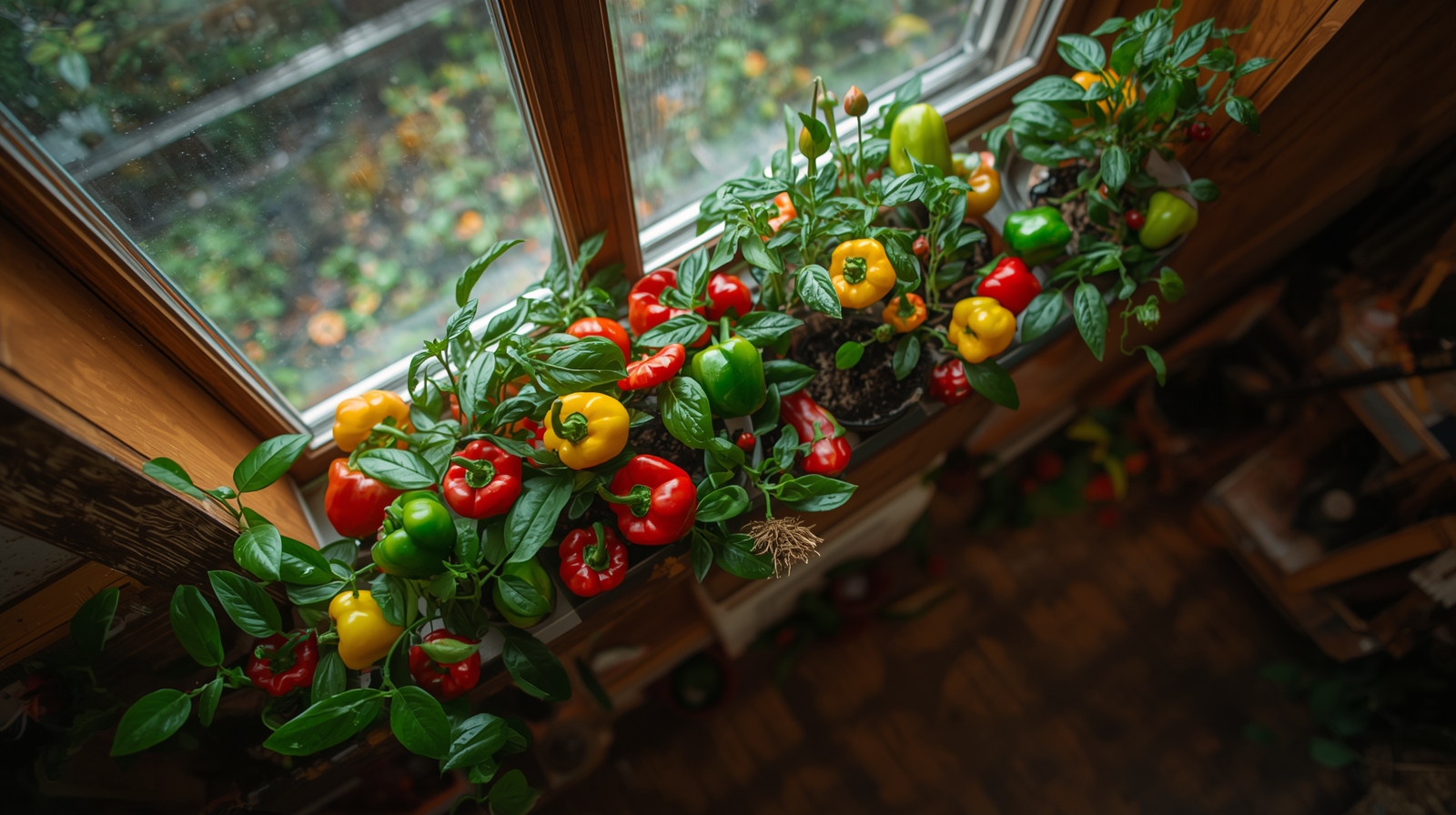
Peppers are a diverse group of plants, with flavors ranging from sweet to intensely hot. When the desired conditions are accurately replicated, they can thrive indoors, allowing you to harvest abundant peppers year-round. To ensure the healthiest plants and the highest yields, you need to provide everything the plant requires to grow. Below are some basic tips to help your pepper plants thrive.
When to Start Growing Peppers Indoors
Peppers can be grown entirely indoors or started indoors and later transplanted outdoors. If you plan to transplant peppers outside, you should sow the seeds about 8 to 12 weeks before the last frost date in your area. This allows them to become fully established and strong before being moved outdoors. They should be placed outside about two weeks before the last frost. By this stage of the growth cycle, pepper plants will be hardy enough to tolerate harsher weather and the cooler soil of an outdoor garden.
If you plan to grow peppers indoors throughout their entire growth cycle, you can start seeds at any time. As long as their needs for water, light, temperature, and nutrients are fully met, they can grow well indoors year-round. You may need to use grow lights, especially during winter, to help simulate proper growing conditions.
Tips for Growing Peppers from Seed
Many different factors determine a plant’s health, and each must be given equal consideration. Peppers require sufficient warmth and sunlight, both of which must be replicated when growing peppers indoors.
Provide Enough Space
Peppers need plenty of space to grow. They have large, spreading root systems that require large containers to develop fully. In addition, the plants themselves can grow quite large, depending on the variety. Choose an open, uncluttered area in your home so the plants can grow without obstruction. If space is limited, consider growing smaller pepper varieties. Dwarf peppers, for example, have smaller root systems and require less space. You can also prune pepper plants if necessary to reduce their overall size.
Light Requirements
Peppers need a strong and consistent light source to grow well. Place pepper plants near a window to maximize daily light exposure. South- and southwest-facing windows receive the most natural sunlight. During the hot summer months, consider moving the plants outdoors during the day so they can absorb as much light as possible. In addition, consider using grow lights to improve lighting conditions for your pepper plants. If you plan to grow peppers indoors throughout their entire life cycle, grow lights will be essential to meet their light requirements. Most importantly, use indoor LED grow lights.
Finding the Ideal Temperature
Each pepper variety prefers a slightly different temperature range. For best results, research the specific type of pepper you are growing to ensure its needs are met. Most peppers thrive at temperatures similar to those comfortable for humans, making them ideal indoor plants year-round because they adapt easily to typical indoor temperatures. Keeping the thermostat set at around 21–24°C (70–75°F) is ideal. Pepper plants prefer warm daytime temperatures and cooler conditions at night. To accommodate this, consider lowering the thermostat at night or moving the plants to a cooler location, such as a closet or a climate-controlled garage.
Humidity Requirements for Pepper Plants
Different pepper varieties have different humidity requirements. For example, Habanero peppers prefer high humidity, while many other types need moderate humidity. For plants that require higher humidity, mist them with a spray bottle. The amount of misting will depend on the plant’s specific needs, but in general, you should mist once a day until water begins to drip from the leaves.
Nutrient Requirements
Pepper plants can benefit from periodic fertilization. A balanced fertilizer with a 15-15-15 ratio (nitrogen–phosphorus–potassium) is ideal. Pepper plants only need to be fertilized one to two times during their entire growth cycle. Allow the seeds to germinate fully and the root system to develop before applying fertilizer for the first time. When the plant reaches a height of about 15 to 30 cm, you can apply the first feeding. The second fertilization should be done when the peppers begin to form and are about the size of a coin. Well-composted manure is also an excellent fertilizer option for pepper plants. Sprinkle an appropriate amount around each plant and distribute it evenly around the base. After fertilizing, water the plants thoroughly.
Watering Requirements
Water is perhaps the most important factor in proper plant care. It is essential for plant health, and both overwatering and underwatering can weaken plants and potentially cause them to die. Most pepper varieties require moderate watering and are easily prone to waterlogging. Therefore, it is important to grow peppers in pots with drainage holes and to use well-draining soil so the roots do not sit in excess water. When the top layer of soil in the pot feels almost dry, with only slight moisture remaining, it is time to water. Water thoroughly until it just begins to drain from the holes at the bottom of the pot. Empty any excess water from the saucer so the roots do not remain submerged, as this can lead to root rot over time.
Oxygen Requirements
When choosing a location to grow peppers indoors, consider where the air is freshest. Because plants need oxygen to grow, they are very sensitive to air pollutants and can become unhealthy if the oxygen supply contains chemicals. If you smoke, keep smoke outdoors and away from the plants. Tobacco smoke and residue are known to cause several plant diseases. Always wash your hands after smoking and before touching your plants to minimize the risk of contamination. In addition, your pepper plants should be placed in a clean room, free from odors and kitchen fumes, with easy access to windows to provide fresh air when needed.
Growing Time
The growth time of pepper plants depends on the variety you are growing. Seeds can take anywhere from two weeks to one month to fully germinate, followed by another three months before they begin to produce fruit. The size, color, and texture of the peppers are all indicators of whether they are ready to be harvested, and this varies by variety. Harvesting slightly early or late is not a problem, as the peppers are still edible; however, they taste best when fully ripe.
With the right light, temperature, humidity, and nutrients, you can grow healthy, vigorous pepper plants that produce high yields and excellent flavor. Because peppers thrive in warm conditions, growing them indoors is relatively easy, as you can maintain stable temperatures. However, it is important to note that peppers are not low-maintenance plants they require regular attention and care to grow successfully indoors.
See more: How To Grow Potatoes Indoors