
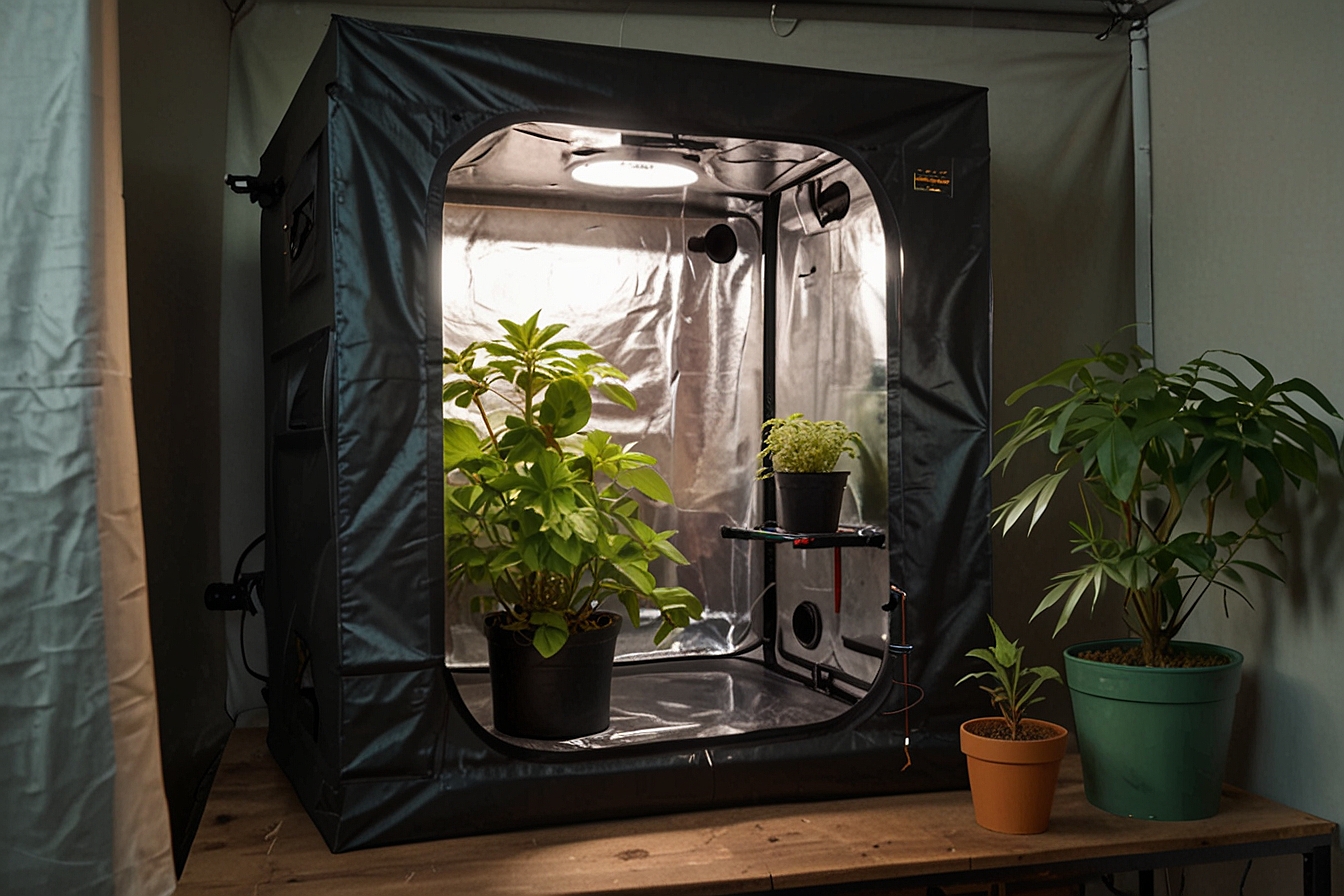
Every year, new grow lights are introduced to the market, and 2026 is no exception, with several of the best LED grow lights now available. There’s no better time than this year to upgrade your lighting, as we’re seeing falling prices, new technology being introduced, and LED grow lights promising better results each growing season. The only question is: “Which LED grow lights are the best this year?”
So what do the best grow lights of 2026 look like?
LED lights were first introduced to the market as replacements for traditional incandescent and fluorescent lamps.
People eventually switched to LEDs, even though the initial cost was higher compared to traditional bulbs.
It was only a matter of time before LEDs became affordable for households. They became price-competitive with conventional lighting while offering the advantage of longer lifespan.
With LEDs becoming the standard in home and office lighting, the horticulture industry also wanted similar features and durability.
Thanks to technological advances, LED grow lights have now earned their place in the horticulture field. Manufacturers are also working to reduce their prices to stay competitive with traditional HPS and CMH grow lights.
If you want to invest in LED grow lights, you should learn more about what to consider when selecting lighting for your indoor garden. You also need to consider your growing space—for example, what type of grow light is best for a 5×5 grow tent?
What is the proper hanging distance for grow lights?
This will vary depending on the type of light. Some lights need to be placed farther away to avoid leaf burn or heat damage, which can seriously harm plants.
LEDs can usually be placed closer to plants without causing damage because they run much cooler.
How far should LED grow lights be from seedlings?
In the early stages, seedlings are very sensitive and require lower light intensity. This means you should not increase light intensity too soon, as seedlings grow better under gentler lighting. Depending on the size of the fixture, LED grow lights should be placed 24–36 inches above the soil surface.
How far should LED grow lights be from clones?
Cloning cannabis involves using cuttings or branches from a mature plant to grow another plant of the same type. The distance between LED grow lights and clones differs from what young plants need. Clones require strong lighting to begin developing. Depending on the light’s power and the maturity of the plant, the distance can vary significantly—from 14–36 inches above the canopy.
How far should LED grow lights be from flowering plants?
As plants grow, their needs change. After the vegetative stage, plants enter the flowering stage. Mature plants are already well-positioned to thrive. During flowering, LED grow lights should be placed 16–36 inches from the canopy. Bringing the lights closer increases light intensity, helping to maximize photosynthesis. However, if the lights are too close, they can cause stretching, overdevelopment, or even damage to the plant.
What about other growth stages?
Plants require different levels of light depending on their stage of development. To understand the correct distance between your grow light and your plant, it’s important to consider these stages. It’s also crucial to evaluate the light’s power output—usually related to the wattage of the fixture—which is a key factor in determining the optimal LED distance when starting a grow.
Plant growth can be divided into three stages: the seedling stage, the vegetative stage, and the flowering stage.
This means that once a healthy root system is firmly established, it’s time to increase light intensity and lower the light fixture.
Seedling Stage
In the early stage when the plant is still a seedling, LED grow lights should be placed higher above the plant to avoid drying out the soil.
Some growers may want to expose seedlings to high-intensity light to promote faster growth; however, this will not be effective until the plant has rooted. Seedlings are too vulnerable at this stage and require a gentler lighting approach. As the plant matures, higher light intensity is needed to support photosynthesis.
Vegetative Stage
During the vegetative stage, plants respond well to strong light—this is when they are mature enough to use photosynthesis for rapid growth. To increase light intensity, LED grow lights should be positioned closer to the canopy. Strong stems and roots are key to achieving consistent and successful yields.
Although increasing light intensity promotes growth during this stage, it is important to closely monitor your plants and pay attention to any negative symptoms caused by too much or too little light.
Flowering Stage
The flowering stage is the final phase of the plant’s life cycle—this is when fruiting and rapid structural development occur. When transitioning from the vegetative stage to the flowering stage, the change should be “phased in.” To do this, gradually raise the LED grow light higher above the canopy (using the recommended heights mentioned earlier). Monitor the distance carefully, considering the desired plant height and the flowering needs of each specific plant type or crop.
The Harm of Too Much Light
When a plant—such as cannabis—receives too much light at any stage, it will usually show signs of stress. Since LED lights do not produce much heat, the main issue to watch for is any sign of “light burn.” Other negative effects from grow lights placed too close to the canopy may include discoloration or stunted/uneven growth. Both issues must be identified quickly and corrected by adjusting the grow light height.
Signs of light burn in cannabis include upward-curling leaves and a condition known as “bleaching.” Bleaching appears as white or yellow discoloration on the leaves closest to the light source. Light burn can also be identified when the leaf veins remain green while the rest of the leaf turns yellow.
Barrina 480W BU4800 Dimmable LED Grow Light for 4×4/5×5 Grow Tents

Pros:
- Better heat dissipation for longer lifespan
- Consumes less energy with minimal waste
- Promotes optimal growth for plant photosynthesis
- Emits very little heat even after operating 17 hours per day
Cons:
- Brightness does not hold up well over time
- Extremely narrow beam spread, not enough to illuminate nearby plants
See details and prices on Amazon here
A 480W LED grow light can help support your plants.
Where should you place the lights?
Traditional lights need to be positioned several meters away from the plants to protect them from heat, but LED grow lights can be placed much closer because heat is not a major concern.
LEDs are not as intense as traditional grow lights, so placing them too far from the plants may hinder their growth.
If you are willing to invest a decent amount of money in some of the best indoor LED grow lights, you can be sure that various features will allow for more precise lighting at different positions and heights.
Don’t be afraid of placing LED grow lights too close.
Although many lights can penetrate several meters deep into the plant canopy, that does not mean you should use this as your reference.
About 90 cm (3 feet) above the plant canopy is fine, and it gives you enough room to inspect and care for your plants. A height of 1.5 meters (5 feet) also works.
What environments do LED grow lights work well in?
You may have read online that some lights work better in certain conditions.
While this is true for most traditional grow lights, it is not necessarily true for LED grow lights.
As long as the environment is indoors, LED grow lights will perform well.
This means all types of grow tents, sheds, rooms, closets, converted garages, and windowless greenhouses are suitable for LED grow lights.
LED grow lights work well for both soil-based systems and hydroponic systems.
If you’re wondering whether LED grow lights are compatible with your growing environment and medium, the answer is yes.
So now you clearly know what to look for when choosing the best lights for indoor growing.
These lights are designed to perform well in every possible configuration of an indoor growing project.
Guide to Buying Affordable LED Grow Lights
There are many manufacturers of these lights on the market, which can make things difficult for first-time buyers. Read below for tips on how to choose LED grow lights:
Choose lights with adjustable output spectrum:
As mentioned earlier, plants have different characteristics at various stages of their life cycle. To provide plants with the appropriate variety of effective lighting, you should choose models that are easy to control.
As a general rule, choose lights with an adjustable output spectrum. When you can change the light spectrum, you can simulate different seasonal light changes, helping your plants grow exactly the way you want.
Consider the type of plant you want to grow:
Although you can use grow lights for most plants, different brands may be better suited for different plant types.
If you want to grow flowers, vegetables, or fruits, you should choose brands such as Apache Tech, Kind LED, Lush Lights, and Truth Lighting.
Choose Philips GreenPower, Pro MAX Grow, and Total Grow if you grow plants for commercial purposes.
If you want to grow plants indoors, LED grow lights are essential. When buying, choose models suitable for the type of plant you are growing. You should also ensure you purchase from a reputable store. Do some research, read reviews of LED grow lights, and you will definitely be satisfied with your decision to switch to LED grow lighting.
Conclusion
Indoor growing is becoming increasingly popular—and so are the tools required for it. In the past, you could only grow plants and fruits that matched your local environment. But today, technological advancements have provided many devices that allow you to grow a wide variety of plants even without sufficient ambient light. ECO Farm LED grow lights are the best choice for you.
See more: Low Budget Grow Tent Complete Kit Reviews 2026
[…] See more: How far away do you keep 480W LED grow Light […]